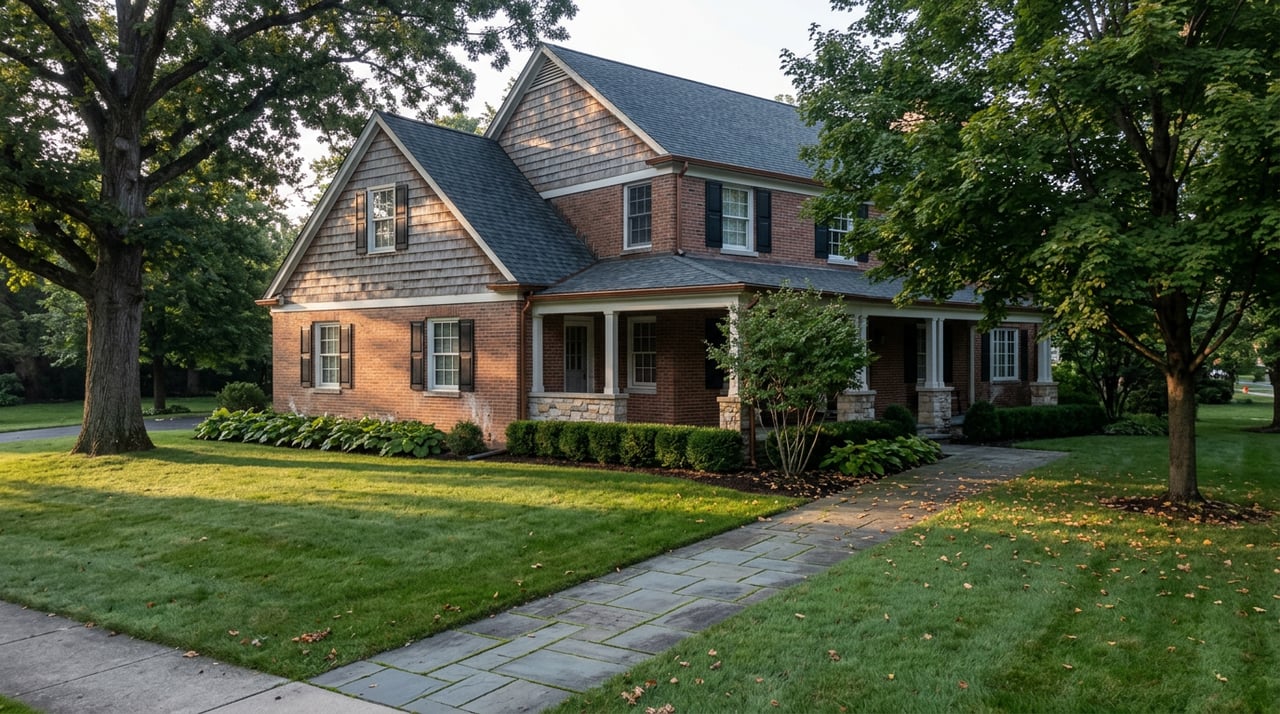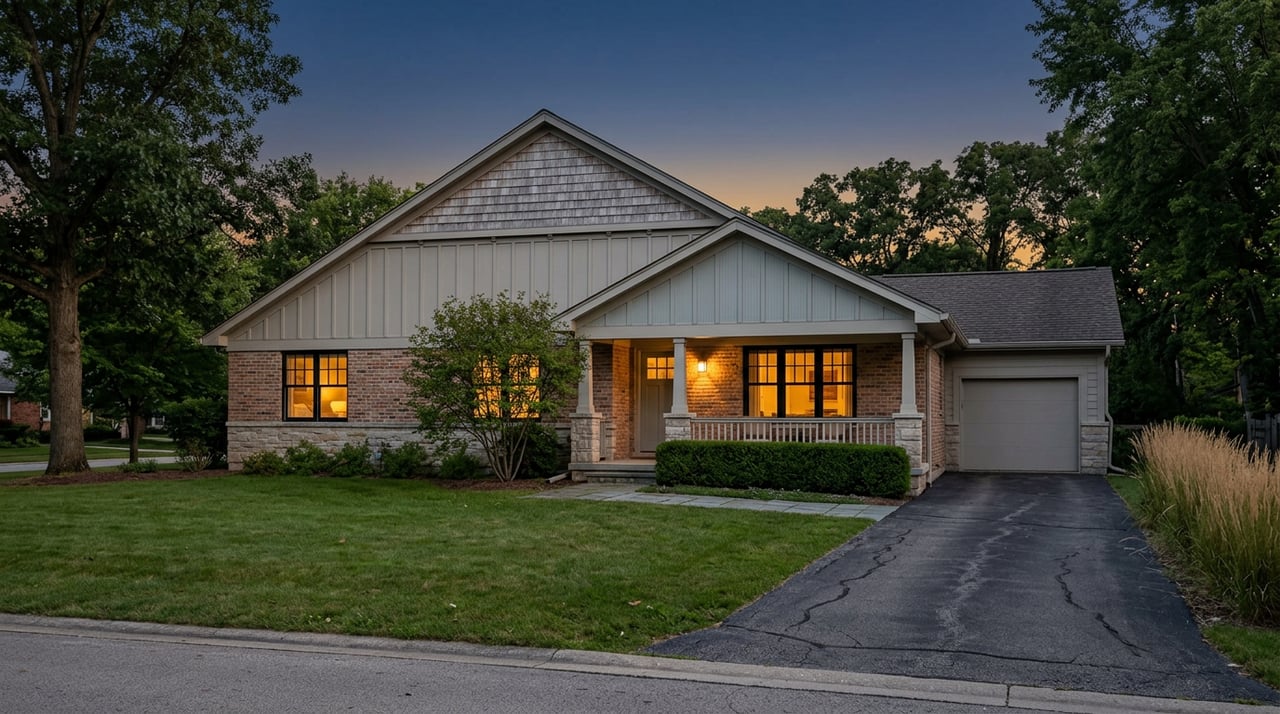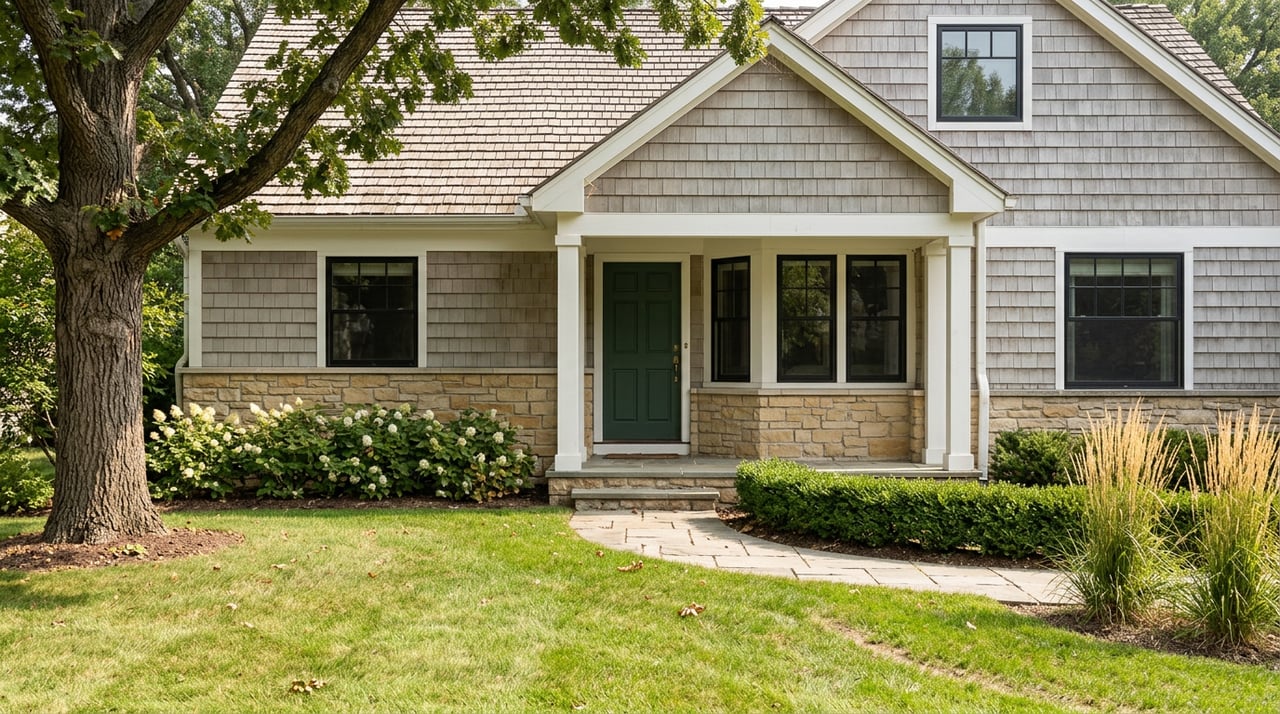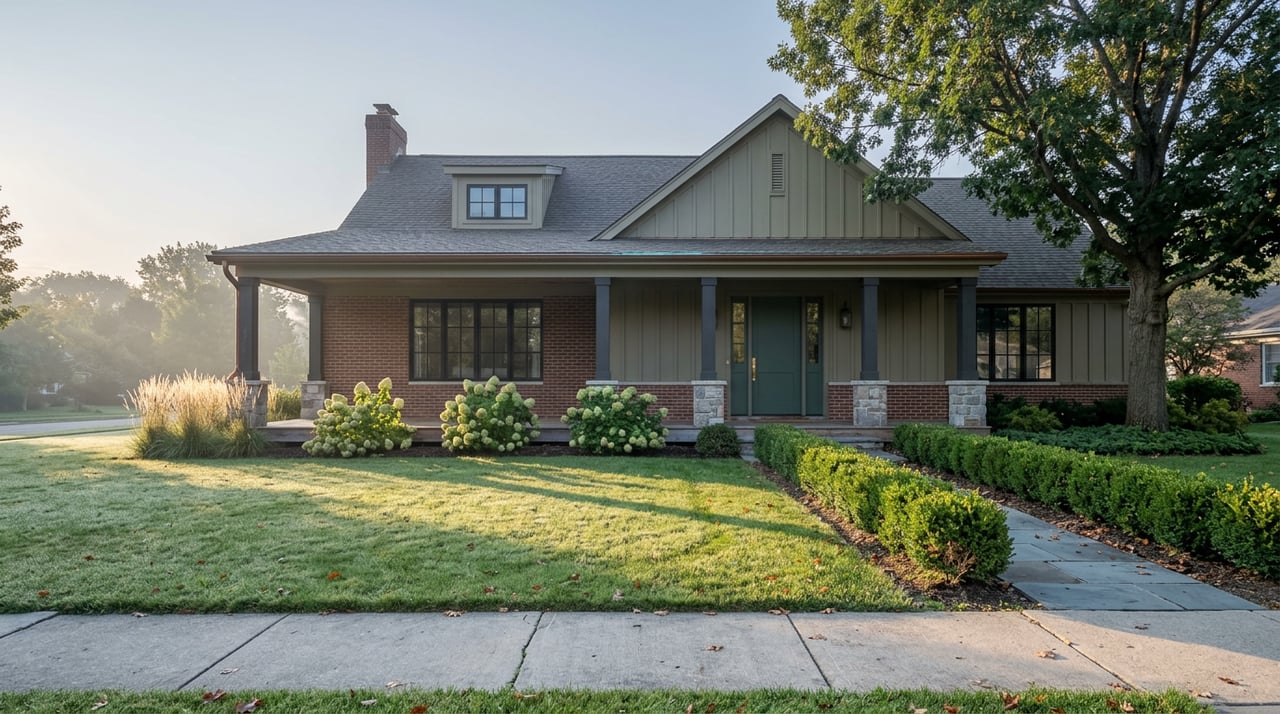
A buyer walks into a cottage on one of Greendale's original courts, three blocks from Broad Street, and falls for it immediately. Original hardwood upstairs. A kitchen someone updated in the last five years. Walk to coffee, walk to the pub, walk to the library. Then the lender calls with a question nobody warned them about: does this house share a structural wall with the one next door, and if so, how do we appraise it.
That call is where the real math on a Greendale Original starts, and it rarely shows up anywhere on the listing sheet.
Two Neighborhoods, One Village
Greendale is unusual in a way that matters more to buyers than most portal descriptions let on. The village's historic core, built between 1936 and 1938 under a New Deal program that also produced Greenbelt, Maryland and Greenhills, Ohio, was constructed by the federal government itself: 572 living units across 366 buildings, about half single-family and half duplexes or row houses sharing walls in groups of up to six. The government sold those units off to the families renting them starting in 1949, with the transfer finished by the end of 1952. The core was added to the National Register of Historic Places in 2005 and designated a National Historic Landmark in 2012, one of fewer than 2,500 such landmarks nationwide.
Everything built after that, the ranches and colonials filling out the rest of the village and newer pockets like Overlook Farms, sits outside that historic boundary. Same zip code, same schools, same Village Days parade route. Very different rulebook.
The Rulebook Only Kicks In After You Own It
Here is what the historic designation actually does. It does not require federal permission to renovate. National Register and National Historic Landmark status recognize significance, they do not regulate what an owner can do to a private building. The restriction comes from a separate, local layer: Greendale's own historic preservation ordinance, which applies specifically to properties inside the designated district.
Under that ordinance, any exterior alteration, reconstruction, new construction, or demolition on a designated historic property requires a Certificate of Appropriateness from the village's Historic Preservation Commission before a building permit can even be issued. The commission has 45 days to rule once an application is filed.
Exterior changes must read as new work while still matching the scale and character of the historic street around them, under the standard the Historic Preservation Commission applies to every application.
Ordinary maintenance and like-for-like repairs are exempt. New siding, a bumped-out addition, a different roofline, a torn-down structure are not. The village code was also updated to explicitly bar demolition of an Original home in the R-4 and R-5 zoning districts, closing a gap that used to exist only in the design guidelines rather than the code itself.
None of that shows up in a listing photo. All of it shows up the first time an owner wants to build a deck.
What the Numbers Actually Show
Here is where the story gets more interesting than "historic homes cost more." Two listings tagged specifically inside Greendale's Village Center Historic District recently priced at $265,000 for 1,228 square feet and $329,900 for 1,355 square feet, working out to roughly $216 and $243 per square foot. Meanwhile, homes in the newer parts of the village have traded in a similar band: a 3,012-square-foot house at $645,000 (about $214 per square foot) and a 4,177-square-foot house at $899,000 (about $215 per square foot).
The per-square-foot price is nearly identical whether the house is a 1938 party-wall cottage inside the landmark district or a newer build a half mile away. That is the part worth sitting with. If the historic core carried a meaningful price premium for its walkability and pedigree, you would expect to see it in the per-square-foot number. You mostly don't. What you get instead for roughly the same dollar per square foot is a smaller footprint, a shared wall in many cases, and a design review board with authority over your gutters.
Village-wide, the market is moving fast regardless of which side of that line a home sits on. Homes sold in Greendale in the three months ending in May 2026 carried a median price of $397,000, up 10.4 percent from the same period a year earlier, with an average of 29 days on market, down from 32 days the prior year. A separate July 2026 read put the median closer to $379,900 with homes moving in as few as 12 days, a gap likely explained by different methodologies for what counts as a sale and what counts as a listing, but every source agrees on the direction: quick, competitive, and still climbing.
The Costs That Don't Show Up in Escrow
Two frictions are specific to the historic core and worth pricing in before you write an offer.
The first is financing. Party-wall construction, common throughout the Original courts, tends to complicate conventional underwriting in a way detached construction does not, since shared-wall homes typically have a thinner pool of directly comparable sales for an appraiser to work from. This is well known enough locally that at least one investor group buying homes for cash in Greendale specifically flags party-wall Originals as some of the hardest properties to move through a conventional sale, which tells you something about where the friction actually sits.
The second is time. If your plan for an Original includes anything visible from the street, budget the 45-day review window into your timeline before you budget the contractor. A buyer who assumes they can close and start exterior work the following week is planning around a process that does not exist in the newer sections of the village.
Before you write an offer on a home inside the historic boundary, it is worth asking a few direct questions:
- Has any past exterior work on this specific property gone through the Historic Preservation Commission, and is there a paper trail?
- Does your lender have experience underwriting party-wall properties in this specific district, and will that affect your rate lock timeline?
- If your plans include anything beyond in-kind repair, have you built the 45-day certificate window into your renovation schedule?
- Have you compared the price per square foot against a non-historic comp in the same village, not just against other historic listings?
If You Want Broad Street Without the Wall
Not every buyer needs to solve this trade-off by choosing between charm and flexibility. Homes in Greendale's post-1950s sections, including newer construction in areas like Overlook Farms, sit outside the review boundary entirely while still landing a short drive or bike ride from the same Broad Street storefronts: Panther Pub & Eatery, Dia Café, Serendipity Boutique Marketplace. Some of these newer listings also back directly onto Root River Parkway, trading a shared wall for a private, tree-lined lot without giving up much in commute time to the village center.
For a buyer who wants the walkability and the small-town texture Greendale is known for, but not the design review board weighing in on their windows, that is often the more comfortable trade.
A Few Questions Buyers Ask Before Making an Offer
Does the National Historic Landmark designation mean I need federal sign-off to renovate? No. That designation recognizes the district's significance. It does not regulate what a private owner does to the property. The requirement to get a Certificate of Appropriateness comes from Greendale's own local ordinance, separate from the federal designation.
Can a party-wall Original ever be demolished and rebuilt? Under the village's current code, demolition of an Original home in the R-4 and R-5 districts is not permitted. Buyers looking at these properties as future teardown lots should assume that option is off the table.
Is the historic core actually more expensive per square foot than the rest of the village? Recent listing data suggests the gap is smaller than most buyers expect, often landing within a few dollars per square foot of newer construction elsewhere in Greendale. The real cost difference shows up later, in financing friction and renovation timelines, not in the sale price itself.
Where This Leaves You
A Greendale Original is not a bad buy. It is a specific kind of buy, one where the sale price tells you less than it appears to and the ordinance tells you more than most listings mention. Whether that trade makes sense depends on what you plan to do with the house after closing, not just what you're paying to get in the door.
If you're weighing a historic cottage against a newer build in the same village, or trying to figure out how a party wall or a pending renovation might affect your financing timeline, Karen Larson has spent decades working properties on both sides of that line across Southeastern Wisconsin. Let's Connect before you write the offer, not after the appraisal comes back with questions.