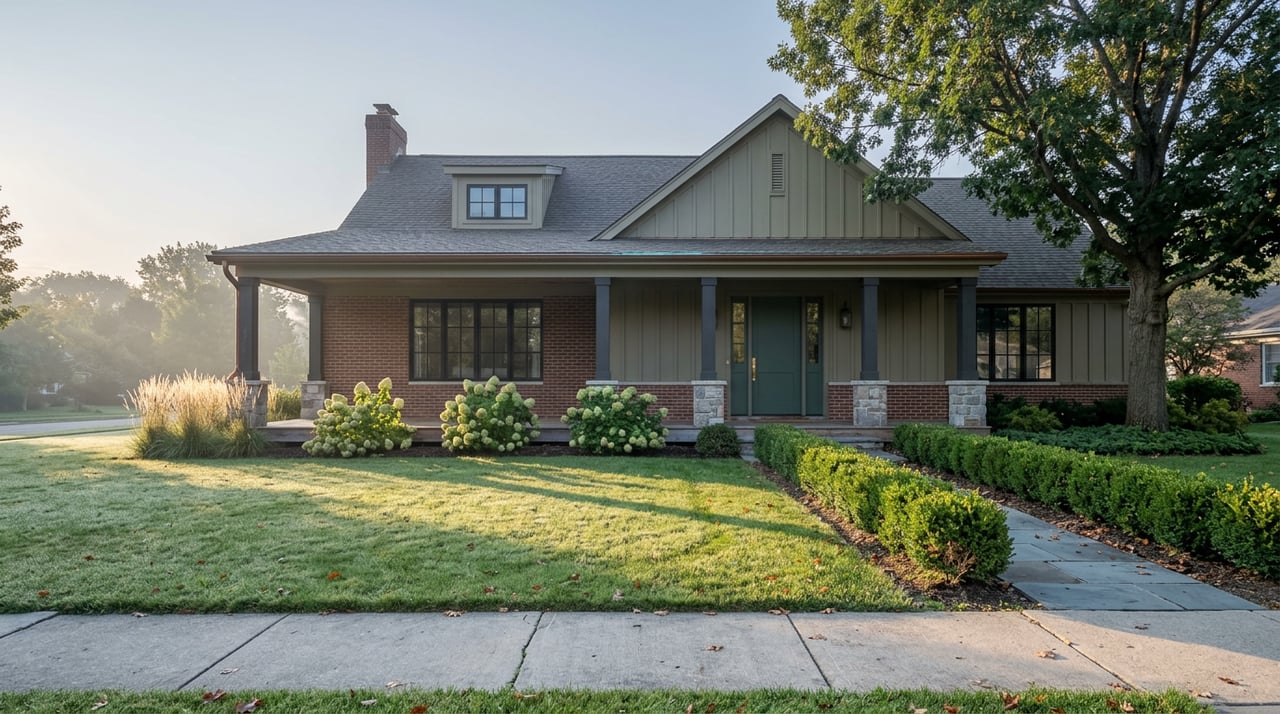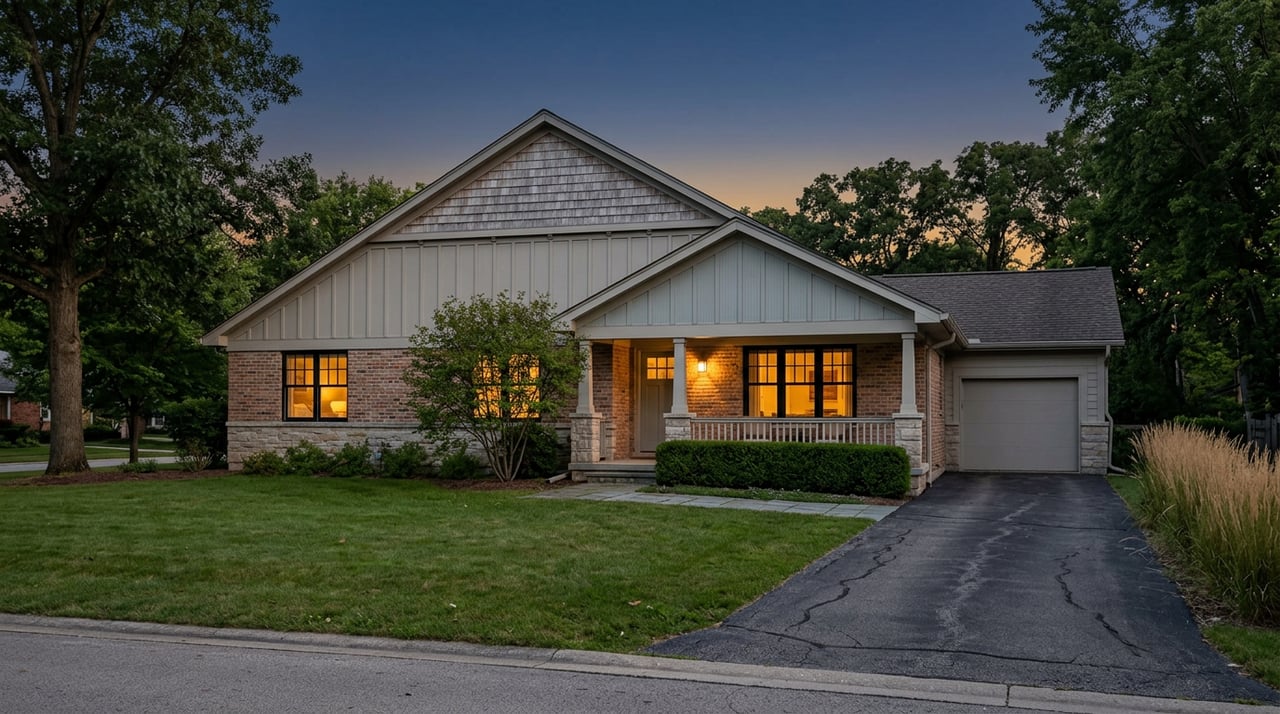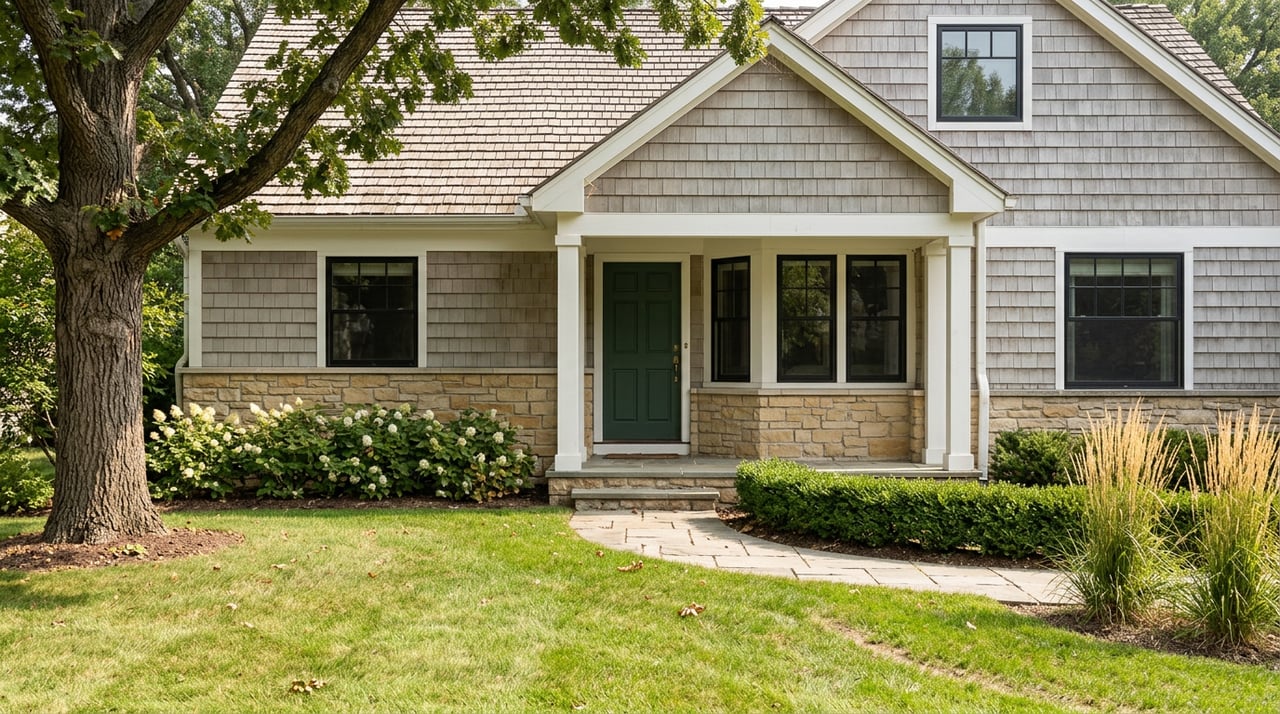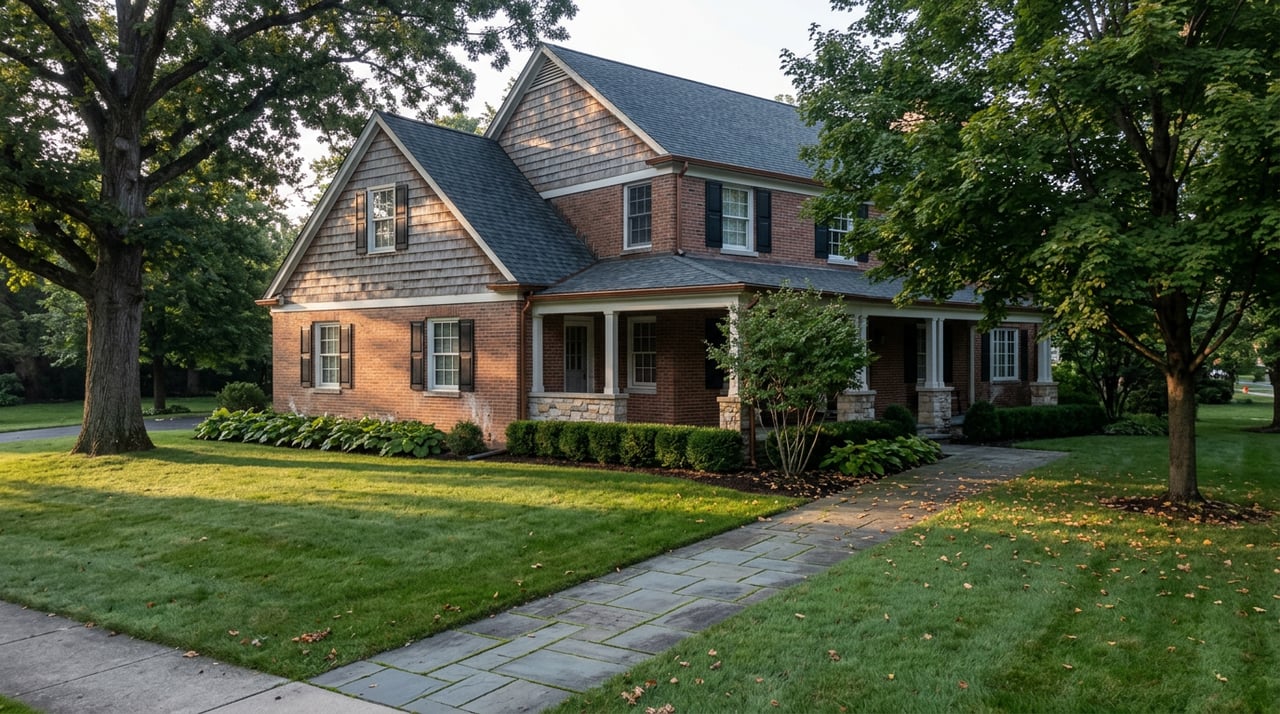
A buyer walks into a modest 1950s cape on a leafy Whitefish Bay street, notices the low asking price relative to the block, and does the math every ambitious buyer does in a land-locked suburb: buy the smallest house on the best street, tear it down, build the home they actually want. It is a strategy that works in a lot of Milwaukee's growing suburbs. In Whitefish Bay, the math looks the same on paper and plays out very differently once you own the lot.
I have walked clients through this exact scenario more than once. The surprise is never the price of the land. It is how few homes in this village ever actually get torn down, and how much of the real work happens after closing, in front of a village commission, not at the closing table.
The Instinct Every Buyer Brings to This Market
The "buy the worst house on the best street" approach makes sense almost everywhere else. If a lot is desirable and the structure on it is dated or undersized, a rebuild lets you capture the location without inheriting someone else's floor plan. Buyers who have done this in Brookfield, Mequon, or newer subdivisions across Waukesha County bring the same playbook to Whitefish Bay.
The playbook assumes two things: that vacant or teardown-ready lots turn over with some regularity, and that once you own the land, the design process is mostly between you and your architect. Neither assumption holds up well in a village built out almost entirely between the 1920s and 1950s, on roughly 4,600 single-family lots with very little room left to add new ones.
What the Village's Own Records Show
Whitefish Bay tracks this more closely than most communities, in part because residents pushed for it. In 2017, after a run of demolitions drew enough concern that trustees created an Ad Hoc Residential Teardown/Rebuild Review Committee to study it, village staff pulled the actual numbers. Over the five years from 2013 through 2017, the village issued permits for exactly 12 teardown and rebuild projects out of roughly 4,600 single-family homes. Eight of those twelve were concentrated in just two years, 2016 and 2017, which was the busiest stretch the village had seen and still amounted to a small handful of projects a year.
That is the baseline you're working from if you're picturing a steady supply of buildable lots. It never existed, even during the years residents were worried it might be getting out of hand.
In a village this built out, the scarcity that matters isn't housing supply. It's teardown supply, and it was never large to begin with.
The Approval Layer Nobody Budgets For
Buy the lot and you still have to get through the village's Architectural Review Commission, whose stated job is to protect the character and property values of the community by reviewing the design of anything built or substantially altered within it. That includes full rebuilds, but it also includes additions, and the commission takes both seriously.
Two pieces of that process catch buyers off guard. First, any project within a defined "Design Area" around a proposed home triggers notice to neighboring property owners, and the village extended its submittal deadline from 10 days to 17 specifically to give neighbors more time to weigh in before a hearing. Second, the village enforces Floor Area Ratio limits, meaning the size of what you can build is capped as a percentage of your lot, not just by setback lines. A buyer who falls in love with a floor plan sized for a larger subdivision lot elsewhere may find it does not fit the FAR allowed on a classic Whitefish Bay parcel.
None of this is theoretical. In 2024, a local architecture firm working on a second-story addition to a 1950s Whitefish Bay home documented its own path through the process, which included proactively gathering letters of support from adjacent neighbors before the ARC hearing to strengthen the case for approval. That was an addition, not a teardown. The same scrutiny applies, often more so, to a full rebuild.
Three Ways In, and What Each One Actually Costs You in Time
| Path | What you're really buying | Approval layer you'll meet | Where the time goes |
|---|---|---|---|
| Buy an existing home as-is | The house you see today | None, unless you change it later | Financing and closing only |
| Renovate or add on | The existing bones plus new square footage | Architectural Review Commission | Design Area neighbor notice, possible plan revisions |
| Full teardown and rebuild | A cleared lot in an established block | ARC review plus Floor Area Ratio limits plus demolition permitting | Design Area notice, FAR calculations, and a genuinely small pool of comparable projects to learn from |
The further right you move on this table, the more the timeline depends on people and processes outside your control. That is the trade-off a teardown buyer is actually making, and it rarely shows up in the listing price.
What the Current Market Is Actually Telling You
Layer today's market on top of that scarcity and the picture gets clearer. Over the three months ending August 2026, Whitefish Bay's median sale price ran around $692,000, up close to 8 percent from the same period a year earlier. At the same time, a separate market snapshot for the village showed the median sale price essentially flat to slightly down, a difference that has less to do with the market cooling and more to do with how few transactions it takes to swing a median in a village that sells only a few dozen homes a month. When your buildable inventory is measured in single digits some years, one or two expensive rebuild sales can move the average in ways that have nothing to do with the broader trend.
The luxury segment tells a related story. In 2025, homes priced above $1 million in Whitefish Bay were selling in an average of about 17 days, at roughly $412 per square foot, the fastest and highest-priced tier in the market. That pace reflects strong demand for finished, move-in-ready homes at the top of the market, not an active pipeline of new construction feeding it. As of this writing, there are no active new-construction listings in the village at all. The demand for polished, larger homes is real. The supply of newly built ones to meet it is close to nonexistent, because so few lots ever go through the teardown process to begin with.
What This Means If You Want to Build New Here
If a teardown and rebuild is genuinely the right move for your family, it can still work well in Whitefish Bay. It just needs to be planned as a design and approval project from the first showing, not treated as a formality after closing.
Before writing an offer on a rebuild candidate, it is worth doing a few things most buyers skip:
- Confirm the Floor Area Ratio for that specific lot and zoning district before you fall for a floor plan sized for somewhere else.
- Bring in an architect who has been through the village's Architectural Review Commission before, ideally on a project similar in scope to yours.
- Ask whether the seller or listing agent has any record of prior contact with the village's Building Services Department about the lot, since that history can shape what a future design review expects.
- Budget real time, not just money, for the neighbor notice period built into the Design Area process.
None of this should discourage a buyer who has their eyes open. It should replace the assumption that a rebuild is mostly a construction project with the more accurate understanding that it is, first, an approval project.
A Few Questions Buyers Ask Before Making a Move
Does every renovation go through the same review as a full teardown? Additions and major exterior changes go through the Architectural Review Commission as well, not only complete rebuilds. The 2024 second-story addition project is a clear example of a non-teardown project that still required the full neighbor notice and hearing process.
Can I just buy a home where the previous owner already secured ARC approval? Sometimes, but approvals are typically tied to a specific design and applicant, so a change in plans or ownership can mean returning to the commission. This is worth confirming directly with the seller before assuming an existing approval transfers cleanly.
Is a teardown ever the wrong strategy here? Not inherently, but given how few lots go through the process each year and how much of the timeline depends on design review rather than construction, buyers who need a fast turnaround are usually better served by an existing home that already fits how they want to live.
If you are weighing a move to Whitefish Bay and trying to figure out whether a particular lot is realistically rebuildable, or whether an existing home already gets you most of what you're after, I'd rather help you sort that out before you write an offer than after. You can reach out through Karen Larson any time you want a straight answer about what a specific property in this village will actually let you do.